Why cats meow at humans in the first place
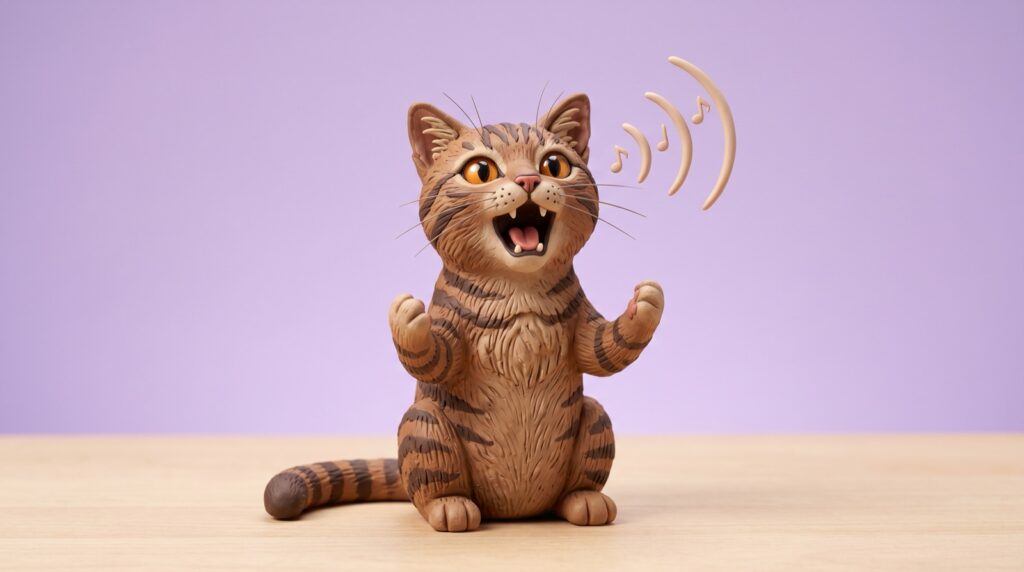
Adult cats do communicate with one another, but a lot of human-directed meowing is a special social behavior. Kittens meow to their mother, and many adult cats keep using similar vocal habits with people because it works. We respond. We look at them, talk back, get up, fill a bowl, open a door, or pet them.
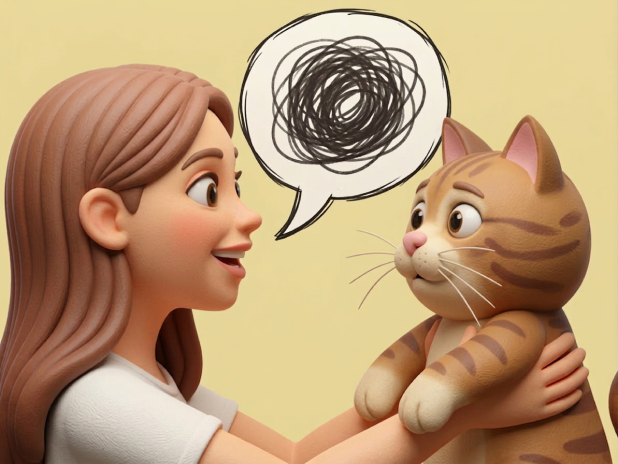
That means your cat’s meow is often less about a single fixed dictionary definition and more about a repeatable pattern. The sound matters, but so does the moment. Greeting, hunger, access, attention, and stress all create slightly different versions of the same vocal habit.
The most useful way to interpret a meow is to combine the sound with context, body language, and routine.
The most common reasons cats meow at people
Greeting and social connection
Many cats have a special hello meow. It often happens when you walk into a room, return home, or say their name. These meows tend to be short, relaxed, and paired with upright posture or a tail held high.
Food, treats, and learned routines
If your cat has learned that a certain cupboard means snacks or that 6 p.m. means dinner, they may start talking before the event happens. These meows are often repetitive, focused, and timed around habit.
Attention and interaction
Some cats meow because they want active engagement. They may want petting, play, a lap, or simply company. If the meow stops as soon as you interact, attention is a strong clue.
Doors, access, and environmental control
A closed bedroom door, a blocked window, an empty water fountain, or a favorite perch that is no longer accessible can all trigger vocalizing. In these cases, your cat is usually trying to change something physical in the room.
Stress, confusion, or discomfort
Not every meow is lighthearted. A cat that sounds unusually intense, paces while vocalizing, hides between meows, or shows sudden behavior changes may be stressed or uncomfortable.
How context changes the meaning of a meow
People often want a simple answer like “one short meow means happy,” but cats do not work like that. A short meow near the food bowl can mean hunger. The same sound during grooming could mean “stop.” Interpretation gets better when you track where the meow happens, what happened right before it, and whether body language looks relaxed or tense.
What you should do when your cat meows at you
First, look for the obvious need. Is food late? Is the litter box dirty? Is the door closed? Is your cat asking for play? If the answer is no, look at body language and recent changes in routine.
When a meow may be a sign of a problem
If your cat starts meowing much more than usual, especially at odd hours or with obvious distress, it is worth paying attention. Pain, thyroid issues, hearing changes, vision loss, urinary discomfort, and age-related confusion can all increase vocalizing.
Do cats meow to communicate with humans more than with other cats?
Often, yes. Adult cats commonly use human-directed meows more than they use the same type of vocal behavior with other adult cats.
Does a loud meow always mean my cat is hungry?
No. Hunger is one reason, but attention, routine, stress, confusion, and access to spaces can all produce loud or repeated meowing too.